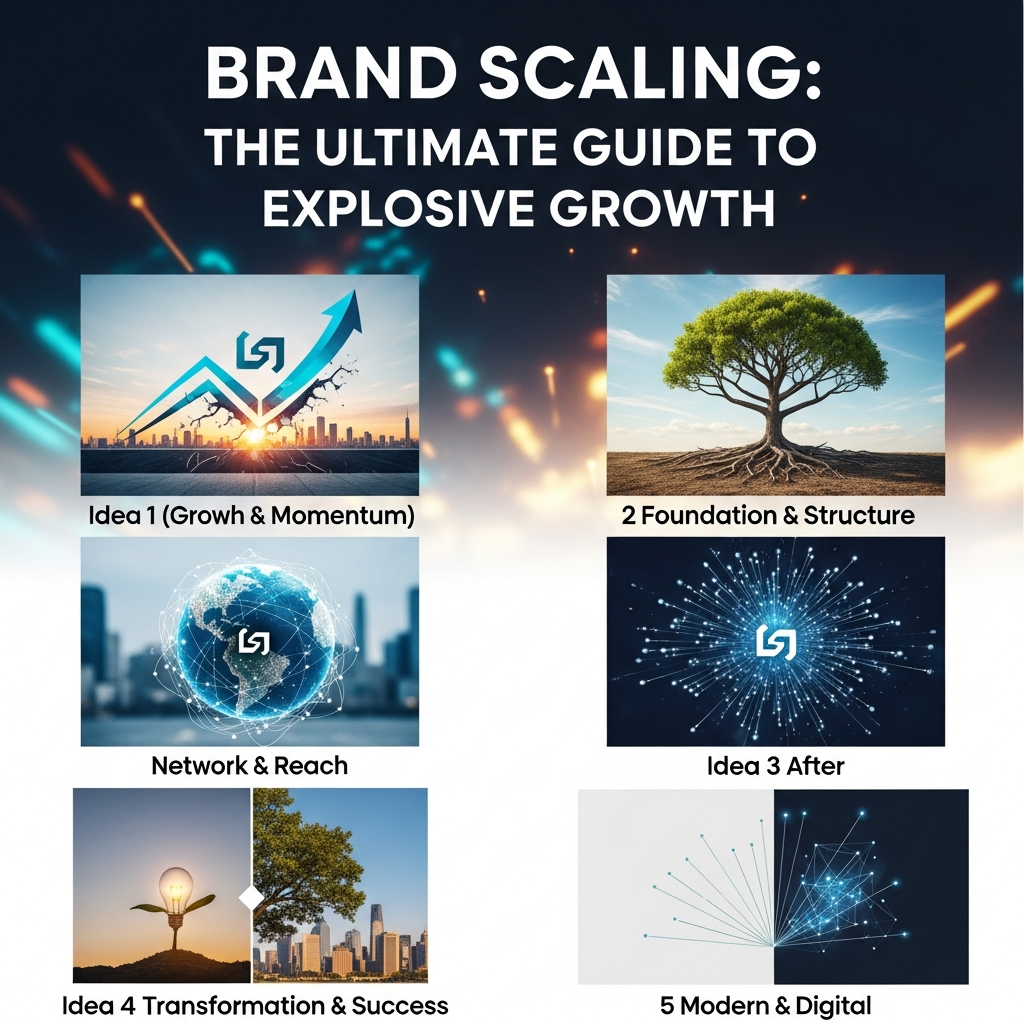
The Blueprint for Exponential Growth: Unlocking the Power of Strategic Brand Scaling
Brand scaling is far more than simply growing your customer base or increasing sales volume; it’s a strategic evolution designed to expand your brand’s influence, reach, and profitability in a sustainable and controlled manner. It involves systematically building the internal infrastructure, refining external messaging, and optimizing operational processes to support significant, long-term growth without compromising brand integrity or customer experience. In today’s dynamic marketplace, businesses must move beyond mere growth to intelligent scaling, ensuring every step forward reinforces their market position and enhances their value proposition. This article provides a strategic blueprint for understanding the critical components of brand scaling. While this article provides the strategic blueprint, successful execution requires a detailed, structured, step-by-step guide to navigate the complexities and truly operationalize these concepts.

Building a Robust Foundation for Brand Scaling
At the heart of any successful brand scaling initiative lies an unshakeable foundation built on clarity and strategic foresight. Without a clear understanding of your brand’s core identity and market positioning, efforts to grow will inevitably lead to dilution, misdirection, and wasted resources. This initial phase is about defining the essence of your brand and understanding precisely where it fits within the competitive landscape.
- Define Your Core Identity: Before expanding, you must solidify what your brand stands for. This includes articulating your mission, vision, values, and unique selling proposition (USP). Why does your brand exist beyond making a profit? What consistent message do you want to convey across all touchpoints? A strong, clearly defined identity acts as a compass, guiding all future decisions and ensuring every expansion effort aligns with your foundational principles.
- Understand Your Audience Deeply: Scaling isn’t about reaching everyone; it’s about reaching more of the right people. Thorough audience research goes beyond surface-level demographics to uncover psychographics, behaviors, pain points, and aspirations. Knowing your ideal customer intimately allows you to tailor your offerings and communication strategies, making your growth both more efficient and more impactful.
- Solidify Market Positioning: How do you want to be perceived relative to your competitors? Establishing a clear and differentiated market position ensures that as you expand, you claim a unique space in the minds of your target consumers. This strategic brand development prevents you from becoming just another option and empowers you to command premium value as your brand extends its reach.
Investing time and effort in these foundational elements provides the clarity needed for sustainable brand expansion, preventing costly missteps down the line.
Streamlining Operations for Efficient Brand Scaling
Once your strategic foundation is secure, the next critical step in achieving efficient brand scaling is optimizing your operational framework. Many businesses hit a growth ceiling not due to a lack of demand, but because their internal systems cannot efficiently handle increased volume. To scale effectively, a brand must transition from reactive solutions to proactive, scalable operations.
- Develop Scalable Systems and Processes: Growth often exposes inefficiencies in manual or ad-hoc processes. Creating standardized, documented, and repeatable workflows across all departments—from marketing and sales to customer service and product delivery—is paramount. This isn’t just about efficiency; it’s about predictability and quality control. Scalable business models rely on systems that can handle increased load without breaking down, maintaining consistent quality as volume increases.
- Invest in a Robust Technology Stack: Leveraging appropriate technology is non-negotiable for modern brand expansion. This includes implementing a robust Customer Relationship Management (CRM) system, marketing automation platforms, e-commerce solutions, and data analytics tools that can grow with your business. The right digital infrastructure for growth automates repetitive tasks, provides actionable insights, and ensures seamless customer journeys, reducing manual effort and increasing capacity.
- Cultivate an Adaptive Organizational Structure: As a brand scales, its team grows. The organizational structure must evolve to support this growth, empowering employees and ensuring clear lines of communication and accountability. This includes fostering a culture of continuous improvement and providing the tools and training necessary for your team to adapt to new processes and technologies. Operational efficiency for expansion hinges on a team that is well-supported and aligned with the brand’s larger strategic goals.
By focusing on operational excellence, your brand can handle increased demand smoothly, maintaining high standards and customer satisfaction, which are crucial for sustained success.
Expanding Your Footprint: The Essence of Consistent Brand Scaling
With strong foundations and optimized operations, a brand is ready to strategically expand its market footprint. This phase is about amplifying your message and broadening your reach while maintaining the consistency and quality that define your brand. It’s about more than just marketing; it’s about strategically engaging with a larger audience and ensuring your brand experience remains exceptional.
- Implement a Multi-Channel Marketing Strategy: To scale your brand successfully, you need to be where your customers are. This means developing a cohesive multi-channel strategy that integrates various platforms—digital and traditional—to deliver a consistent brand message. Omni-channel brand promotion ensures your brand narrative is unified, whether customers encounter you on social media, via email, through content marketing, or offline. This consistent messaging is vital for building trust and recognition at scale.
- Prioritize a Seamless Customer Journey: As your customer base grows, maintaining a high level of customer satisfaction becomes a critical challenge and opportunity. Mapping the entire customer journey, from initial awareness to post-purchase support, allows you to identify pain points and optimize every interaction. Customer acquisition at scale is only valuable if you can also excel at retaining customers during growth through exceptional service and support, turning new customers into loyal advocates.
- Foster Community and Engagement: True brand scaling extends beyond transactions; it cultivates a community around your brand. Active engagement through social platforms, dedicated forums, and user-generated content strengthens customer loyalty and advocacy. Empowering your customers to become part of your brand story creates a powerful, organic growth mechanism, reinforcing your brand’s value and deepening its market penetration.
This strategic approach to market expansion ensures that every new customer touchpoint reinforces your brand’s value and promise, driving both growth and long-term loyalty.
Data-Driven Decisions: Navigating the Brand Scaling Journey
Achieving sustainable brand expansion is not a set-it-and-forget-it endeavor; it requires continuous monitoring, analysis, and adaptation. The final critical element for successful brand scaling involves establishing robust systems for gathering insights, measuring performance, and making informed, data-driven decisions to ensure sustained growth and innovation.
- Establish Key Performance Indicators (KPIs): To effectively guide your brand’s growth, you must define what success looks like and how it will be measured. Establishing clear, measurable KPIs across all strategic areas—such as customer lifetime value, market share, brand awareness metrics, operational efficiency, and customer satisfaction scores—provides a quantifiable roadmap. Measuring brand growth consistently allows you to track progress against your objectives and identify areas for improvement.
- Implement Continuous Market and Customer Feedback Loops: The market and your customers are constantly evolving. Brands that scale successfully remain attuned to these shifts. Building formal and informal feedback mechanisms – from customer surveys and social listening to competitive analysis and trend reports – allows your brand to adapt proactively. This continuous stream of information is crucial for informed decision-making and ensures your offerings remain relevant and compelling.
- Embrace Strategic Agility and Iteration: The business landscape is rarely static. Successful brand scaling requires an agile mindset, where strategies are treated as living documents, subject to refinement and iteration based on performance data and market insights. This involves fostering a culture that encourages experimentation, learns from failures, and quickly pivots when necessary. Adaptive business strategies are essential for navigating unexpected challenges and seizing new opportunities, ensuring continuous improvement in branding.
By systematically gathering and analyzing data, and being prepared to adapt, your brand can confidently navigate the complexities of scaling, ensuring its growth is not only rapid but also resilient and enduring.
Taking the Next Step to Implementation
Understanding the framework is only the beginning. To bypass the trial-and-error phase and start seeing results quickly, you need the complete, ready-to-use blueprint. If you want the complete step-by-step templates and proven execution plan, download our full [What is Brand Scaling? | The Brand Scale Kick-Start Masterclass] guide here: [https://kick-start.net/product/what-is-brand-scaling-the-guide-to-exponential-growth/]